
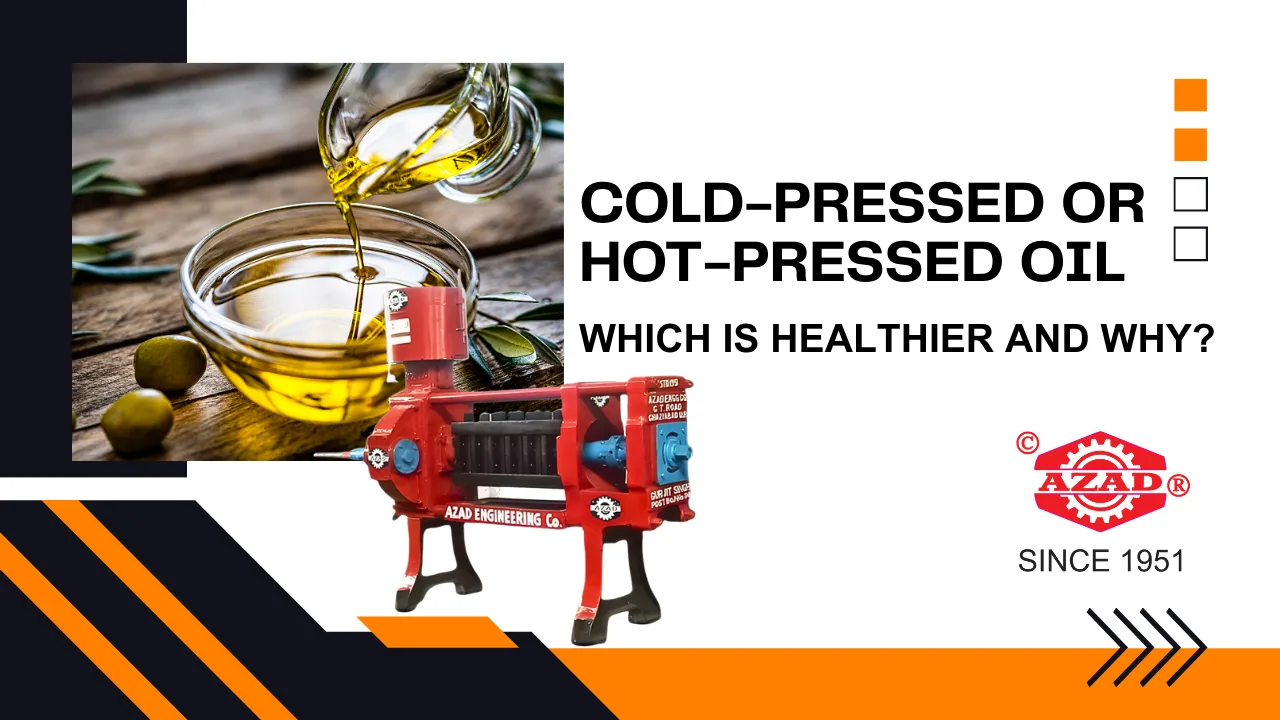
Cooking oil, Mustard Oil is a daily essential in every kitchen and a key ingredient in food processing industries. However, with growing health awareness, many consumers are now asking an important question: Cold-pressed or hot-pressed oil — which is healthier and why?
Both extraction methods produce edible oils, but the process used significantly affects the nutritional value, taste, aroma, and overall health benefits of the oil. In this article, we will explore the differences between cold-pressed and hot-pressed oils, compare their health impacts, and understand why modern oil producers are increasingly investing in advanced oil expeller machines.
What is Cold-Pressed Oil?
Cold-pressed oil is extracted from seeds, nuts, or fruits using mechanical pressure without applying external heat. The temperature during extraction is typically kept below 40–50°C, ensuring that the oil retains its natural nutrients, antioxidants, flavor, and aroma.
The process involves:
- Cleaning and drying the seeds
- Crushing them using a mechanical expeller
- Extracting oil at low temperature
- Filtering without chemical refining
This method preserves the oil in its most natural form.
Common Cold-Pressed Oils:
- Mustard oil
- Groundnut oil
- Coconut oil
- Sesame oil
- Sunflower oil
What is Hot-Pressed Oil?
Hot-pressed oil, also known as refined oil, is extracted by heating seeds before or during pressing. High temperatures increase oil yield but may destroy some natural nutrients. In many cases, the oil undergoes further refining processes such as bleaching and deodorizing to improve shelf life and appearance.
The process includes:
- Heating seeds to high temperatures
- Mechanical pressing
- Chemical refining
- Bleaching and deodorizing
While this method produces higher quantities of oil, it may reduce nutritional value.
Nutritional Comparison: Cold-Pressed vs Hot-Pressed Oil
1. Nutrient Retention
Cold-pressed oils retain:
- Natural antioxidants
- Vitamin E
- Phytochemicals
- Essential fatty acids
Hot-pressed oils may lose some heat-sensitive nutrients during high-temperature processing.
2. Chemical Usage
Cold-pressed oils:
- No chemical solvents
- No artificial bleaching
- Minimal processing
Hot-pressed oils:
- Often involve chemical refining
- May contain trace residues (depending on processing standards)
3. Flavor and Aroma
Cold-pressed oils maintain:
- Natural aroma
- Rich taste
- Authentic flavor profile
Hot-pressed oils:
- Neutral taste
- Less natural aroma
Which Oil is Healthier?
From a health perspective, cold-pressed oils are generally considered healthier because they retain natural nutrients and are minimally processed. They are especially beneficial for:
- Heart health
- Digestive health
- Skin nourishment
- Boosting immunity
Cold-pressed oils are rich in natural antioxidants that help fight inflammation and oxidative stress.
However, hot-pressed oils are not necessarily unhealthy. They are more affordable, have a longer shelf life, and are widely used for commercial frying and bulk food production.
Smoke Point Consideration
One important factor is the smoke point — the temperature at which oil starts to burn.
- Cold-pressed oils usually have a slightly lower smoke point.
- Refined hot-pressed oils often have a higher smoke point, making them suitable for deep frying.
For daily cooking and moderate heat, cold-pressed oils work perfectly. For very high-temperature frying, refined oils may be more stable.
Market Demand for Cold-Pressed Oils
With increasing awareness about natural and chemical-free products, cold-pressed oils are gaining popularity in India and globally. Consumers prefer:
- Organic products
- Chemical-free extraction
- Traditional oil processing methods
This rising demand has encouraged entrepreneurs to start cold-pressed oil businesses using advanced oil expeller machines.
Role of Oil Expeller Machines in Healthy Oil Production
The quality of cold-pressed oil depends largely on the machinery used. Modern oil expellers ensure:
- Controlled temperature
- Efficient extraction
- Higher purity
- Consistent performance
Azad Expeller is a leading manufacturer of cold press oil expeller machines known for delivering durable, high-performance, and energy-efficient equipment. Their machines are designed to extract oil naturally while preserving nutrients and ensuring maximum yield.
Azad Expeller machines are widely used in:
- Small-scale oil mills
- Medium oil processing units
- Commercial oil production plants
The company focuses on quality engineering, robust construction, and reliable performance to meet the growing demand for healthy edible oils.
Business Opportunity in Cold-Pressed Oil
Starting a cold-pressed oil business can be highly profitable due to:
- Increasing health awareness
- Premium pricing of natural oils
- Growing organic product market
- Rising demand in urban areas
By investing in reliable machinery from established manufacturers like Azad Expeller, entrepreneurs can ensure consistent oil quality and long-term durability.
Cost Difference
Cold-pressed oils are generally more expensive because:
- Lower extraction yield
- Slower processing
- Minimal chemical treatment
Hot-pressed oils are cheaper due to:
- Higher production volume
- Industrial refining
- Longer shelf life
Consumers willing to pay a premium often prefer cold-pressed oils for their perceived health benefits.
Environmental Impact
Cold-pressed oil production is considered more environmentally friendly because:
- No chemical solvents
- Lower processing emissions
- Less industrial waste
Hot-pressed and chemically refined oils may involve more complex industrial processes.
Final Verdict: Which One Packs a Punch?
If your priority is maximum nutrition, natural taste, and chemical-free processing, cold-pressed oil clearly packs a stronger health punch. It preserves essential nutrients and offers a more authentic flavor experience.
If your focus is cost-effectiveness, high-temperature cooking, and longer shelf life, hot-pressed oils may be more practical.
Ultimately, the choice depends on your cooking style, health goals, and budget.
Conclusion
Cold-pressed and hot-pressed oils differ significantly in processing method, nutritional value, taste, and health impact. Cold-pressed oils are generally considered healthier because they retain natural nutrients and avoid chemical refining. Hot-pressed oils, on the other hand, are more economical and suitable for large-scale commercial use.
With increasing demand for natural oils, advanced extraction machinery plays a crucial role in maintaining quality and efficiency. Azad Expeller– leading Oil Expeller Machine Manufacturer, continues to lead the industry by providing high-quality cold press oil expeller machines that support healthy oil production and sustainable business growth.
Choosing the right oil — and the right machinery — can make all the difference in delivering quality, nutrition, and long-term success.